Waterproof Flooring Installation That Shrugs Off Spills
A rigid SPC core that doesn’t soak up water or swell, installed by licensed, insured pros across Tampa Bay, the Gulf Coast and Greater Orlando.
About $5 to $12 per square foot installed, before your discount. The exact number comes after a free measurement.
50% off your flooring installation$1,200 Off + 5% Senior & Military Savings Claim →Free Measurement in 60 Seconds
Answer 5 quick questions. No cost, no obligation.
What floor are you replacing?
What “waterproof” covers, and what it doesn’t
The word gets used loosely in flooring ads. Here is what it means on the floors we install, in plain terms, so nothing surprises you later.
- The planks themselves don’t take on water. The core is stone plastic composite. Soak a piece in a bucket overnight and it comes out the same size it went in. Laminate and wood can’t say that.
- Spills sit on top. Juice, a pet accident or a tipped mop bucket stays on the surface, where a towel picks it up.
- A slow leak is a different story. If a supply line drips behind a cabinet for weeks, water can get under any floor, waterproof or not. The planks survive it. What’s under them still needs to dry.
- That’s why we look at the slab first. Before a single plank goes down, the installer checks the concrete for moisture so you aren’t sealing a problem underneath a new floor.
50% off your flooring installation
$1,200 Off + 5% Senior & Military Savings. Seniors 60+ and active or retired military get an additional 5%. The 50% applies to installation labor.
See rep for details! Mention offer during your design consultation.
SPC, WPC or Laminate: What’s Under the Surface
From the top, all three can look like wood. The core underneath decides how the floor handles water, dents and Florida humidity.
Wood-fiber core
Looks good and costs less, but the core is pressed wood. Water that reaches the edges makes the boards swell, and they don’t go back down.
Wood-plastic core
Waterproof and a little softer underfoot. The core is lighter, so it dents more easily under table legs and heavy furniture.
Stone-plastic core
Waterproof and dense. It stays flat and holds its size when the house warms up or the humidity climbs.
Want the full comparison? Read: SPC vs WPC, which core suits a Florida slab home
From Free Measurement to a Dry, Finished Floor
Each step is there to keep water from being a problem later.
Walk the house
The installer measures each room and looks for past water trouble: stained baseboards, soft spots, swollen laminate edges near sinks and doors.
Check the concrete
Florida homes mostly sit on slabs. Moisture coming up through the slab is tested before the new floor is ordered.
Clear the old floor
Whatever is there now comes out and leaves with the crew, down to clean, bare concrete.
Lay the rigid core
Planks lock together edge to edge. Seams are pulled tight so spills stay on the surface instead of finding a gap.
Finish the edges
Transitions at doorways and trim along the walls go on last. Then the room is ready to use.
Next-day installation is available, and most installs are completed in a single day once your materials arrive.
What Waterproof Flooring Installation Costs
Plan on about $5 to $12 per square foot installed. A 200 sq ft room runs roughly $1,200 to $1,900 before your discount. Move the slider to your size.
A 12 × 16 bedroom is about 200 sq ft.
Wear layer, room shape and the floor underneath all move the number inside this range.
Estimates only, not a quote. Your price depends on your rooms, the product you pick and the floor underneath, and is set after the in-home measurement.
Adds to the total
- Old tile and thinset that has to be broken out
- Slab spots that need filling
- A thicker wear layer for pets
- Stairs and small, cut-up rooms
Helps the total
- A dry, flat slab
- Big open rooms
- Financing: low monthly payments, 0% interest plans, and same-as-cash offers (for qualified applicants)
- 50% off installation labor
Built for Humidity, Heat and Houses That Sit Empty
A floor in Florida deals with things a floor in Ohio never sees. Here is how a rigid core handles them.
Sticky summers
High humidity makes wood and laminate move. An SPC core stays stable, so gaps and cupping aren’t part of the deal.
Sun through the slider
Direct sun through glass heats any vinyl. Blinds or UV film on west-facing doors keep the floor in its comfort range. Read more
Leaving for the summer
Snowbirds: keep the AC running while you’re gone. Follow the flooring maker’s temperature range and the floor will be fine when you come back. Read more
Pets that come in wet
Dripping dogs off the pool deck and water bowls knocked across the kitchen stay on top of the floor.
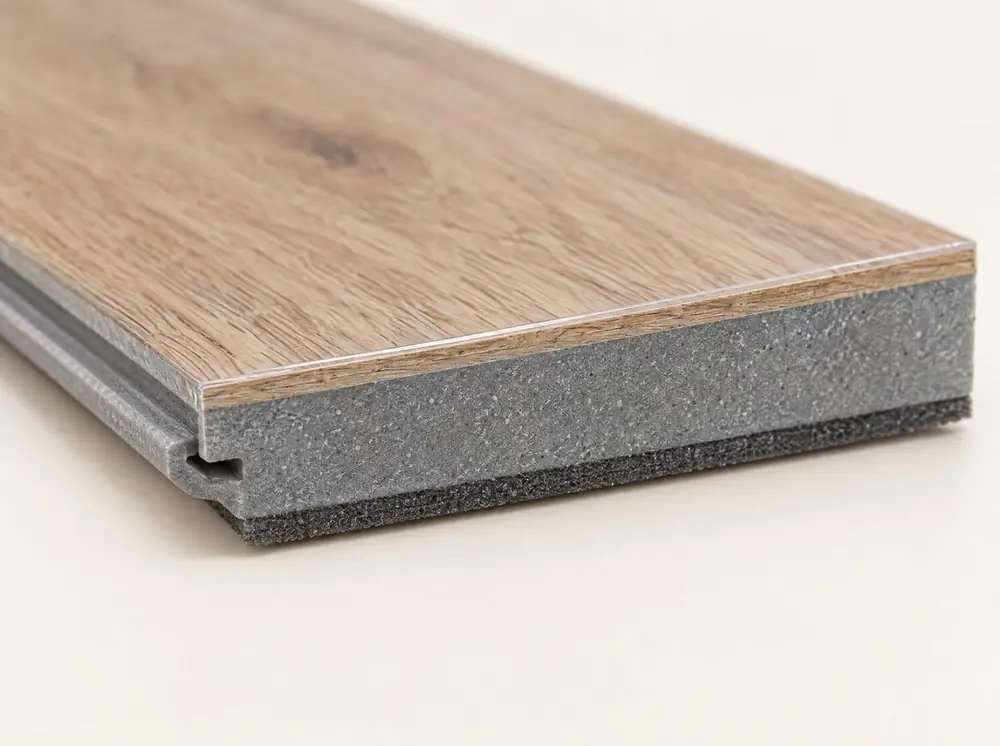
What’s Inside a Plank
The grey middle layer is the part that makes it waterproof.
 12
34
12
34
- Wear layer. Takes the scratches from daily life.
- Design layer. The printed wood grain.
- SPC core. Stone plastic composite. Won’t soak up water.
- Attached pad. Softer and quieter underfoot.
Where the Water Comes From in a Florida House
A waterproof floor handles water that lands on top. In Florida, water also comes up through the slab, in with a storm, out of the air and out of the plumbing.
Up from the slab
A slab on the ground gives off moisture. It won’t hurt the planks, but moisture trapped under any floor is where mold starts. One maker’s limit is 90% relative humidity on an in-place probe test (ASTM F2170), so the test comes before the order.
Out of the air
University of Florida extension notes that most molds do best above 60% relative humidity. The EPA suggests keeping a house under 60%, ideally 30 to 50%. The AC does that job.
In from a storm
Hurricane season runs June 1 to November 30, and the busiest stretch is mid-August to mid-October. SPC planks come through it. The slab and anything under the floor still have to be cleaned and dried, and the EPA puts that window at 24 to 48 hours.
Out of the plumbing
Dishwasher lines, icemaker lines, water heaters and the AC drain line in the air handler closet all leak sooner or later. A waterproof plank buys you time to notice. It doesn’t stop the leak, so fix the source first.
We replace floors once the house is dry. We don’t pump out water or dry out homes. See water-damaged floors
How Each Floor Handles Water
“Water-resistant” and “waterproof” sound close. Here is what the difference looks like in the situations Florida homeowners actually run into.
| What happens | SPC waterproof plank | Laminate | Carpet | Tile |
|---|---|---|---|---|
| A water bowl gets knocked over | Wipe it up. | Fine if it’s wiped up fast. | Soaks into the pad. | Wipe it up. Grout can stain. |
| The washer overflows | Planks are fine. Dry the edges and under the machine. | Boards swell where water reaches the seams. | Pad is soaked and usually comes up. | Tile is fine. Water can get into cracked grout. |
| A slow leak runs for weeks | Planks survive. The slab under them has to dry. | Swollen boards have to be replaced. | Pad and tack strip usually get replaced. | Tile survives. The slab still has to dry. |
| Storm water comes in the lanai door | Planks come through. The floor may need to come up so the slab can be cleaned and dried. | Usually replaced. | Usually replaced. | Tile stays. Grout needs a deep clean. |
Tile handles water well too. See tile removal
Picking a waterproof plank that fits how your house gets wet
When water is the reason you’re buying, these are the details worth asking about.
- Waterproof all the way through. Ask whether the core itself is waterproof or only the top surface. SPC is waterproof through the core. That’s the part that matters when water gets to a cut edge at the wall.
- A texture you can stand on wet. Near a pool door or a shower, an embossed surface gives wet feet more grip than a smooth, glossy one.
- A color that forgives. Mid-tone planks hide dried drips and tracked-in sand. Very dark floors show every water spot.
- A wear layer for the traffic. Pick 20 mil where dogs come in wet or the family cuts through from the pool.
- The maker’s warranty wording. Read what it says about water before you choose. The installation also comes with our Limited Lifetime Warranty, which isn’t transferable.
Where a Waterproof Floor Earns Its Money
Every room can get the same plank. These are the spots where the waterproof core does the most work.
Lanai and pool doors
Wet feet, wet dogs and wind-driven rain all land here first. A rug on a non-rubber backing inside the door catches most of it. One maker warns that long contact with rubber can stain vinyl.
Kitchen
The dishwasher and the icemaker line are the usual leaks. Planks run up to the cabinet bases, so a drip that shows at the toe kick is a warning worth taking seriously.
Laundry and water heater
An overflowing washer or a failing water heater can put a lot of water on the floor in a short time. The planks take it. Dry the floor and the wall edges the same day.
Air handler closet and hall
When the air handler sits in a hall closet, a clogged drain line can overflow into the hallway without much warning. A waterproof hall floor makes that a mop-up.
Getting ready for install day
A waterproof floor only helps if the water problems are dealt with first. Use this list the week before.
- Fix every known drip. A running toilet, a leaky supply valve or a sweating pipe should be repaired before the new floor covers the area.
- Swap tired hoses. If the washer hoses or the icemaker line are old or cracked, replace them while the appliance is already pulled out.
- Let wet areas dry. If anything got wet recently, give it time and tell the installer. The slab is tested before the floor goes down.
- Keep the house cool and dry. Leave the AC running before, during and after install day.
Questions Worth Reading Up On
Short, straight answers before your measurement.
SPC vs WPC: which core suits a Florida slab home
Read → HumidityVinyl plank vs laminate in Florida humidity
Read → Sun and heatVinyl plank near sliding doors and in Florida rooms
Read → SnowbirdsKeeping vinyl floors safe while you’re away for the season
Read → FamilyIs vinyl flooring safe for kids and grandkids
Read →Waterproof Flooring Questions
Is waterproof flooring really waterproof?
The planks are. The SPC core doesn’t absorb water or swell. Water that gets underneath the floor and sits there is a separate problem, which is why the slab is checked first and leaks get fixed before install.
What’s the difference between waterproof and water-resistant?
Water-resistant floors, like most laminate, hold off a spill for a while if you wipe it fast. Waterproof floors don’t absorb water at all. For kitchens, baths and homes with pets, waterproof is the safer pick.
Can water get under the planks?
It can, from a long, slow leak or standing water. The seams lock tight, which keeps everyday spills on top. A leak that runs for days needs the source fixed and the area dried.
What does waterproof flooring cost installed?
Most jobs land between about $5 and $12 per square foot installed, before your discount. The exact number comes after the free in-home measurement.
Can I leave the house closed up all summer?
Yes, as long as the AC stays on. Keep the house inside the flooring maker’s temperature range while you’re away. Shutting the air off completely is hard on any floor.
Does it hold up to pets?
Accidents and water bowls don’t hurt the core. For claws, choose the 20-mil wear layer. Over an SPC core, a 20-mil floor lasts 20 years or more.
Is there a warranty?
Yes. Installations come with our Limited Lifetime Warranty. It isn’t transferable to a later owner of the home.
My slab looks dry. Does it still need a moisture test?
Yes. Concrete can look dry on top and still give off moisture from below. One maker sets the limit at 90% relative humidity on an in-place probe test. Testing first means a new floor doesn’t seal moisture in against the slab.
What if storm water gets in after the new floor is down?
Stop the water and get the house drying. The EPA says water-damaged areas should be dried within 24 to 48 hours to prevent mold. The SPC planks won’t swell. If water got underneath, the floor may need to come up so the slab can dry. We replace floors after drying. We don’t do water removal.
What indoor humidity is best for the floor?
The EPA suggests keeping a home below 60% relative humidity, ideally between 30 and 50%. That range is good for the house and the floor. In Florida, a running AC is what keeps you there.
Can I use a rubber-backed mat by the door?
Choose one with a non-rubber backing. One maker’s care instructions say long contact with rubber can leave a permanent stain on vinyl flooring.
Waterproof Floors Installed Near You
533 ZIP codes across Tampa Bay, the Gulf Coast and Greater Orlando.
Other Jobs We Handle
Ready for a Floor That Can Take a Spill?
Book your free in-home measurement. Phones are answered 9:00 AM – 5:00 PM.